A roof repair
Price the failed detail and the adjoining material needed for a sound connection. A boot replacement, wall flashing repair and damaged shingle section can involve different access and underlying work.
Understand a repair boundary
Understand the parts of a roof budget, then discuss the measured roof and complete work scope for your Farmington property.
A roof price follows the actual work. The surface area and material set part of the budget; removal, damaged wood, flashing and access can change the whole project.
We help Farmington owners connect those parts before choosing a repair or replacement. The national installation example below gives useful scale, while a free inspection and measured scope establish what your roof needs.
These national Homewyse models cover basic installation under favorable site conditions. They exclude old-roof removal and property-specific work.
| National installation model | Published planning input | What to keep separate |
|---|---|---|
| Asphalt shingles | $5.21–$6.82 per roof sq. ft.; September 2026 | Removal, damaged decking, fees, tax and unlisted work. |
| Standing-seam metal | $17.74–$23.95 per roof sq. ft.; May 2026 | Removal, damaged structure, fees, tax and project-specific complexity. |
Sources and adjustable area examples are in the working roof cost calculator. These figures are a national basic-installation model, not a Farmington price survey.
The measured roof surface is different from living area. Roof slopes, overhangs, garages and additions contribute to the covering area. Pitch, valleys and openings change how much detail work is required within that area.
The old roof also matters. Removing several layers takes different work from installing on a ready deck. Damaged wood needs repair before new roofing can be fastened. Flashing, ventilation and edge details need to be included in the assembly rather than treated as decoration.
Height, steep access, staging space and material movement affect labor and protection arrangements. We help connect those conditions to the proposed work so a total price has an understandable scope.
Actual slopes, pitch, valleys, walls and roof openings.
Removal, supporting condition and the details being retained or rebuilt.
Access, disposal, permits and protection of the property.
A localized repair and a full replacement need different boundaries.
Price the failed detail and the adjoining material needed for a sound connection. A boot replacement, wall flashing repair and damaged shingle section can involve different access and underlying work.
Understand a repair boundaryPrice the included slopes, removal, deck work, new assembly and flashings together. Keep the method for additional concealed damage explicit so it does not disappear behind a covering-only figure.
See the replacement scopeA surface inspection can identify clues to damaged wood, but the old covering can hide its full extent. Tear-off reveals the fastening surface. A useful allowance discussion settles included wood work and how additional repairs will be approved and charged.
A wall or chimney detail can also need more than the visible metal. The repair or replacement must connect to the wall and the roof’s water-shedding layers. The scope needs to account for the actual junction instead of assuming every flashing can simply remain.
We help you understand those cost changes in the roof conversation. The allowance is a way to handle a real concealed condition, not a reason to assume every roof has extensive damage.
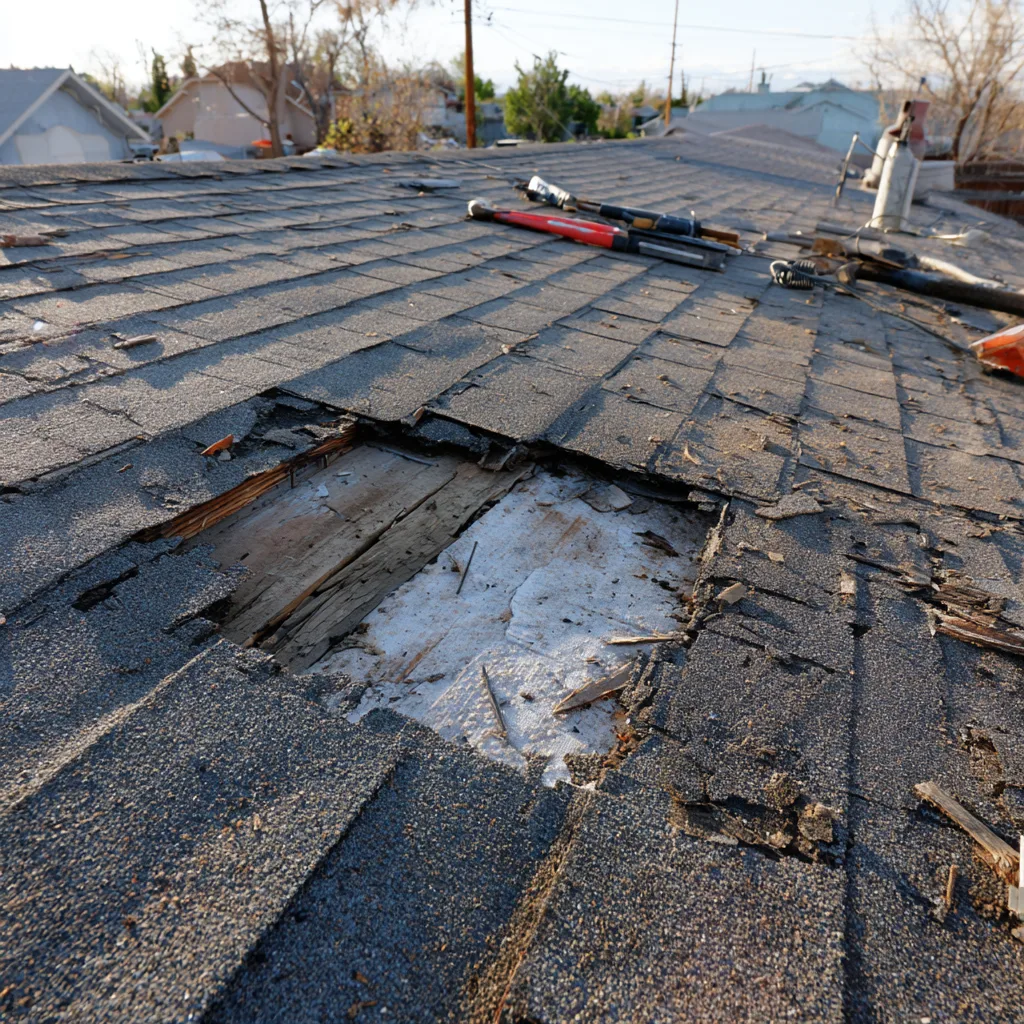
A roofing square is 100 square feet of roof surface. Actual measured roof area, covering requirements and waste affect the quantity needed for a project.
The tool shows a basic national installation range for its stated area and material. The complete project still needs removal, concealed condition, details, access and other charges assessed.
The included work can differ: old layers, decking allowance, flashing, ventilation, materials, disposal and project arrangements. We help make those parts clear before you compare the total.
The visible stain does not establish the roof opening or the condition around it. Flashing access and damaged adjoining layers can widen a repair even when the indoor mark looks small.
Start with a free inspection. We’ll help connect the condition and work scope to a property-specific roofing discussion.